
ISO 22000 Food Safety Management System Standard is a standard prepared based on the HACCP Implementation stages and principles developed by the international Codex Alimentarius Commission (CAC), which aims to ensure food safety throughout the food chain, establish and implement a regular management system and cooperation between all management activities of the organization, analyze all processes, update and continuously improve when necessary.
ISO 22000:2005 is an international standard and defines the requirements for a Food Safety Management System covering all organisations in the food chain “from farm to table”, including food, beverage catering and packaging companies.
ISO 22000 is a standard published by the International Standards Organization to eliminate the complexity of the management system standard experienced in organizations in the food chain.
ARTICLE TITLES OF ISO 22000:2005 STANDARD
1. Scope
2.Referenced standards
3.Terms and definitions
4.Food safety management system
5.Management responsibility
6.Resource management
7.Safe product planning and implementation
8.Validation, verification and improvement of the food safety management system
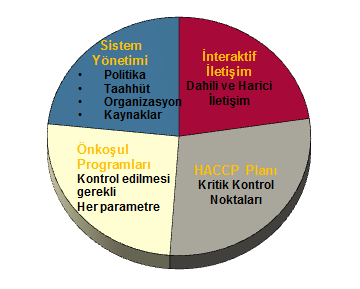
The 4 Key Elements of ISO 22000
CERTIFICATION PROCESS
An organization that wants to obtain a certificate according to the ISO 22000 Food Safety Management System Standard first signs a contract with the certification body authorized to issue this certificate and establishes a quality system in the organization in accordance with the requirements of the ISO 22000 Food Safety Management System Standard.
After the necessary preparations are completed, an audit is requested from the certification body. As a result of the audit conducted by expert auditors, companies that are registered to meet the minimum requirements of the ISO 22000 standard are certified.
The ISO 22000 Certificate is valid for 3 years. During this period, an interim audit is conducted every year to ensure that the organization is carrying out its activities in accordance with the standard conditions, and at the end of the 3 years, a certificate renewal audit is conducted.
Benefits of ISO 22000 Food Safety Management System
Applicability at every stage of the food chain, meeting all demands of consumers regarding food safety, ease of export due to being an internationally recognized system, increasing the work efficiency and satisfaction of employees, raising awareness of employees regarding hygiene and food safety, taking responsibility, improving the working environment, enabling documented proof of process control, reducing the risk of food poisoning and death, minimizing food waste (food spoilage, etc.) and the costs resulting from this waste, reducing product losses and product recall risk, ensuring customer trust and satisfaction, ensuring the use of preventive methods instead of corrective methods by determining potential hazards in advance, providing reliability to food businesses in meeting legal obligations to produce safe food.